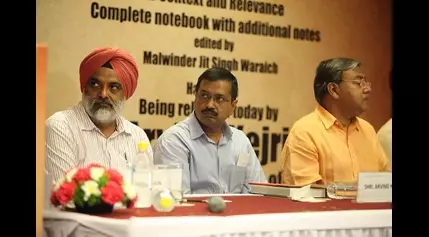
Kejriwal Granted Bail: A Pivotal Moment in India's Legal Landscape
In a significant development, the Indian Supreme Court has granted interim bail to Delhi Chief Minister Arvind Kejriwal, who had been in detention since March 2024 in multiple money laundering cases. The court's decision, which emphasizes the sanctity of Kejriwal's right to life and liberty, has sparked a renewed debate on the balance between legal proceedings and the rights of elected officials.Navigating the Complexities of Power and Accountability
Upholding the Principles of Democracy
The Supreme Court's decision to grant bail to Arvind Kejriwal, the Chief Minister of Delhi, has raised important questions about the role of elected leaders in India's democratic system. The court's acknowledgment of Kejriwal's position as an "elected leader" and the "Chief Minister of Delhi, a post holding importance and influence," underscores the delicate balance between the legal system and the political landscape.The court's decision to refrain from directing Kejriwal to step down or cease functioning as the Chief Minister reflects a recognition of the need to preserve the integrity of the democratic process. By leaving the decision to Kejriwal himself, the court has demonstrated a nuanced approach that respects the will of the people who elected him to office.Balancing Legal Formalities and Personal Grounds
The Supreme Court's referral of the matter to a larger bench for consideration of three key questions of law highlights the complexities involved in the case. The court's focus on the "need and necessity to arrest" under the Prevention of Money Laundering Act (PMLA) and the requirement to balance legal formalities with the personal grounds and reasons necessitating arrest, reflects a desire to establish clear parameters for such cases.This move by the court suggests a recognition of the need to ensure that the legal process is not used as a tool for political maneuvering, but rather as a means to uphold the rule of law and protect the rights of individuals, regardless of their position or affiliation.Navigating the Liquor Policy Scandal
The allegations against Arvind Kejriwal and his party members, related to the Delhi liquor policy scam, have been at the center of this case. The policy, which aimed to boost revenue and combat alcohol counterfeiting, was ultimately revoked in August 2022 amid procedural criticisms.The Enforcement Directorate's (ED) accusations of money laundering, alleging that the policy favored private sellers who provided financial benefits to party leaders, have raised concerns about the integrity of the policy-making process. The court's decision to grant bail to Kejriwal, while he remains in judicial custody in another case related to the same alleged scam, underscores the need for a thorough and impartial investigation to uncover the truth and ensure accountability.Implications for India's Political Landscape
The Supreme Court's decision to grant bail to Arvind Kejriwal, the Chief Minister of Delhi, has far-reaching implications for India's political landscape. It highlights the delicate balance between the legal system and the democratic process, and the need to ensure that the rights of elected officials are protected while also upholding the principles of accountability and transparency.As the case moves forward, with the larger bench set to deliberate on the key questions of law, the outcome will undoubtedly have a significant impact on the way in which the legal system navigates the complexities of power and political leadership in India. The court's approach in this case will set a precedent that will shape the future of India's democratic institutions and the role of elected officials in the face of legal challenges.New


19.9K
794
301
Entertainment


34.6K
1.4K
692
Entertainment

8.7K
174
38
Entertainment








34.3K
1.7K
274
Finance


38.8K
387
170
Finance
40.1K
2.8K
336
Finance